Expert Guide to Selecting a Future Leading Filter Drier Machine Manufacturer in China
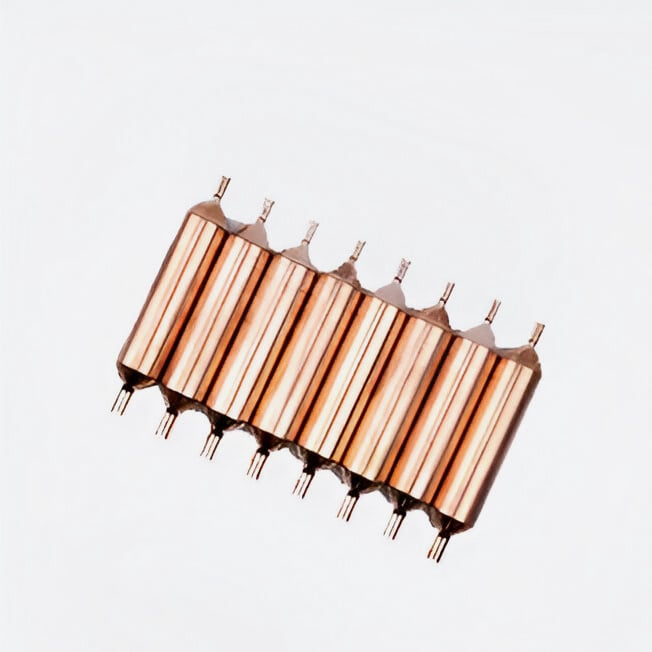
NANTONG, JIANGSU, CHINA, March 27, 2026 /EINPresswire.com/ -- The longevity and reliability of a refrigeration or air conditioning system often hinge on the smallest components within the thermal circuit. Among these, the filter drier serves as a critical guardian, responsible for removing moisture and contaminants that could otherwise cause catastrophic compressor failure. As global environmental regulations tighten and the industry shifts toward more sensitive refrigerants, the quality requirements for these components have reached unprecedented levels. Consequently, procurement professionals and plant managers must identify a Future Leading Filter Drier Machine Manufacturer in China to ensure their production lines meet the rigorous demands of modern HVAC&R standards. This selection process requires a deep understanding of technical precision, material science, and the automation capabilities that define a world-class equipment partner.
Identifying Risks: The Correlation Between Precision and Lifespan
In the HVAC&R industry, a single leak can compromise an entire system, leading to expensive repairs and lost energy efficiency. The filter drier is particularly susceptible to failure at its sealing points. When manufacturers use substandard equipment, the resulting seals often harbor microscopic imperfections or structural weaknesses. These defects might not appear during initial pressure tests but can fail under the vibration and thermal cycling typical of real-world operation. Therefore, the industry has established a fundamental principle: manufacturing precision directly dictates product lifespan.
Selecting a manufacturer that prioritizes micron-level accuracy is the only way to mitigate these risks. Traditional forming methods often rely on mechanical force alone, which can stress the metal and cause thinning at the neck of the drier. This thinning creates a vulnerability where high-pressure refrigerants can eventually escape. Modern procurement strategies now focus on equipment that utilizes controlled deformation techniques. By choosing a partner with a proven track record in high-precision engineering, companies ensure that their components can withstand decades of service without the risk of sealing failure or structural degradation.
Technical Benchmarks: CNC Spinning and Precision Control
The shift toward eco-friendly refrigerants like R290 (propane) has intensified the need for superior sealing technology. R290 is highly efficient but also flammable, meaning the margin for error regarding leaks is effectively zero. To address these challenges, advanced manufacturers have turned to CNC spinning (rotary forming) technology. This process uses a high-speed rotating mandrel to deform the tube end into the desired shape. A critical technical indicator for this machinery is the spindle speed. High-end systems operate at speeds reaching 2800rpm, which generates the necessary friction heat to make the metal more ductile, preventing the micro-cracks that often occur during cold forming.
Furthermore, the level of dimensional control determines the compatibility of the component with the rest of the system. Future-leading manufacturers achieve a precision tolerance of plus or minus 0.05mm. This extreme accuracy ensures that the filter drier shell fits perfectly with the connecting tubes during the final brazing process. Such precision eliminates gaps that could lead to weak braze joints. When analyzing a potential supplier, engineers should examine how the machinery handles different materials, such as copper or aluminum. The ability to maintain consistent results across various alloys demonstrates a deep mastery of mechanical engineering and material science.
Analyzing Efficiency: Transitioning to Automated Integrated Lines
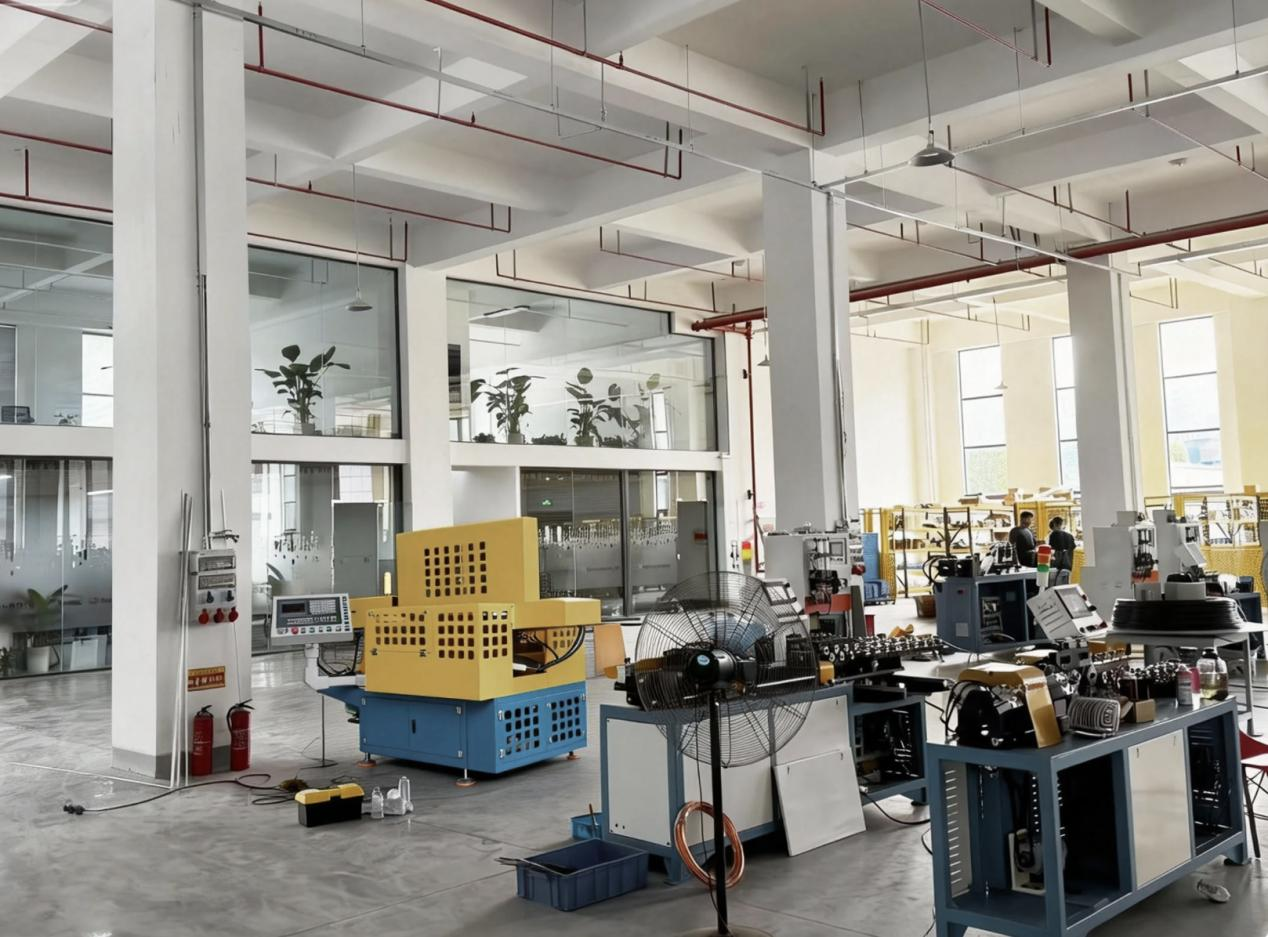
In the current global market, high quality must be accompanied by high output to remain competitive. Traditional, labor-intensive production methods are no longer viable for global brands that require millions of units annually. Leading equipment exporters in China have responded by developing fully integrated production lines. These systems combine multiple steps—such as automatic feeding, spinning, and necking-in—into a single, seamless operation. This integration drastically reduces the handling time between stations and minimizes the risk of human error.
Case studies involving industry giants like Haier and Samsung highlight the impact of this automation. In these high-volume environments, BoBo Machine has implemented lines that achieve a cycle time of just 15 to 30 seconds per piece. Compared to traditional manual or semi-automated setups, these integrated lines provide a significant boost in throughput. Moreover, the transition to automation typically results in a 30% to 40% reduction in labor costs. By removing manual variability, the machinery ensures that the first unit of the day is identical to the last, providing a level of consistency that is impossible to achieve through manual labor alone.
The Outlook for Smart Manufacturing and R&D Investment
The transformation of the heat exchange industry is increasingly driven by "Smart Manufacturing" and Industry 4.0 principles. A manufacturer’s ability to innovate is directly linked to its investment in Research and Development. In China, elite enterprises are no longer just following international trends; they are setting them. For instance, a high-tech enterprise that reinvests 11% of its annual revenue into R&D demonstrates a long-term commitment to technological leadership. This level of investment fuels the development of proprietary technologies and the acquisition of invention patents, which serve as a safeguard for the client’s investment.
Technical depth is often reflected in the composition of a company's team. When 66% of a 50-member elite team consists of seasoned engineers, the manufacturer can offer more than just hardware. They provide comprehensive engineering solutions, including customized equipment designs and intelligent control systems. These systems often feature remote diagnostics and data tracking, allowing factory managers to monitor production health in real-time. This digital transparency is a hallmark of a future-leading partner. It ensures that the equipment remains compatible with the smart factories of tomorrow, where data-driven efficiency is the primary competitive advantage.
Decision Advice: A Checklist for Global Tier-1 Selection
Choosing a machinery partner is a strategic decision that affects a company’s production capabilities for years. For those aiming to supply global brands like Midea, Siemens, LG, or B/S/H, the vetting process must be rigorous. A comprehensive checklist should begin with the manufacturer's experience. Companies with over 30 years in the sector, such as those established in 1995, possess a wealth of "tribal knowledge" that newer firms lack. This experience is vital when tackling complex, customized demands for various industries, including automotive radiators and commercial refrigeration.
The second item on the checklist is the global footprint. A manufacturer that serves customers in over 100 countries demonstrates an ability to navigate different regulatory environments and cultural expectations. This international exposure ensures that the equipment meets various safety standards, such as CE or UL certifications. Finally, prospective buyers should evaluate the after-sales infrastructure. Reliable engineering support and a steady supply of precision-engineered spare parts are essential for minimizing downtime. By following these guidelines and focusing on technical excellence, procurement teams can secure a partnership that drives innovation and sustains growth in the competitive HVAC&R market.
The evolution of the heat exchange machinery sector is clear. The winners will be those who embrace precision, prioritize automation, and invest heavily in the future of smart manufacturing. As China continues to propel its engineering expertise onto the world stage, the opportunities for global partnership have never been greater.
For more information, please visit: https://heat-exchange.com/.
Identifying Risks: The Correlation Between Precision and Lifespan
In the HVAC&R industry, a single leak can compromise an entire system, leading to expensive repairs and lost energy efficiency. The filter drier is particularly susceptible to failure at its sealing points. When manufacturers use substandard equipment, the resulting seals often harbor microscopic imperfections or structural weaknesses. These defects might not appear during initial pressure tests but can fail under the vibration and thermal cycling typical of real-world operation. Therefore, the industry has established a fundamental principle: manufacturing precision directly dictates product lifespan.
Selecting a manufacturer that prioritizes micron-level accuracy is the only way to mitigate these risks. Traditional forming methods often rely on mechanical force alone, which can stress the metal and cause thinning at the neck of the drier. This thinning creates a vulnerability where high-pressure refrigerants can eventually escape. Modern procurement strategies now focus on equipment that utilizes controlled deformation techniques. By choosing a partner with a proven track record in high-precision engineering, companies ensure that their components can withstand decades of service without the risk of sealing failure or structural degradation.
Technical Benchmarks: CNC Spinning and Precision Control
The shift toward eco-friendly refrigerants like R290 (propane) has intensified the need for superior sealing technology. R290 is highly efficient but also flammable, meaning the margin for error regarding leaks is effectively zero. To address these challenges, advanced manufacturers have turned to CNC spinning (rotary forming) technology. This process uses a high-speed rotating mandrel to deform the tube end into the desired shape. A critical technical indicator for this machinery is the spindle speed. High-end systems operate at speeds reaching 2800rpm, which generates the necessary friction heat to make the metal more ductile, preventing the micro-cracks that often occur during cold forming.
Furthermore, the level of dimensional control determines the compatibility of the component with the rest of the system. Future-leading manufacturers achieve a precision tolerance of plus or minus 0.05mm. This extreme accuracy ensures that the filter drier shell fits perfectly with the connecting tubes during the final brazing process. Such precision eliminates gaps that could lead to weak braze joints. When analyzing a potential supplier, engineers should examine how the machinery handles different materials, such as copper or aluminum. The ability to maintain consistent results across various alloys demonstrates a deep mastery of mechanical engineering and material science.
Analyzing Efficiency: Transitioning to Automated Integrated Lines
In the current global market, high quality must be accompanied by high output to remain competitive. Traditional, labor-intensive production methods are no longer viable for global brands that require millions of units annually. Leading equipment exporters in China have responded by developing fully integrated production lines. These systems combine multiple steps—such as automatic feeding, spinning, and necking-in—into a single, seamless operation. This integration drastically reduces the handling time between stations and minimizes the risk of human error.
Case studies involving industry giants like Haier and Samsung highlight the impact of this automation. In these high-volume environments, BoBo Machine has implemented lines that achieve a cycle time of just 15 to 30 seconds per piece. Compared to traditional manual or semi-automated setups, these integrated lines provide a significant boost in throughput. Moreover, the transition to automation typically results in a 30% to 40% reduction in labor costs. By removing manual variability, the machinery ensures that the first unit of the day is identical to the last, providing a level of consistency that is impossible to achieve through manual labor alone.
The Outlook for Smart Manufacturing and R&D Investment
The transformation of the heat exchange industry is increasingly driven by "Smart Manufacturing" and Industry 4.0 principles. A manufacturer’s ability to innovate is directly linked to its investment in Research and Development. In China, elite enterprises are no longer just following international trends; they are setting them. For instance, a high-tech enterprise that reinvests 11% of its annual revenue into R&D demonstrates a long-term commitment to technological leadership. This level of investment fuels the development of proprietary technologies and the acquisition of invention patents, which serve as a safeguard for the client’s investment.
Technical depth is often reflected in the composition of a company's team. When 66% of a 50-member elite team consists of seasoned engineers, the manufacturer can offer more than just hardware. They provide comprehensive engineering solutions, including customized equipment designs and intelligent control systems. These systems often feature remote diagnostics and data tracking, allowing factory managers to monitor production health in real-time. This digital transparency is a hallmark of a future-leading partner. It ensures that the equipment remains compatible with the smart factories of tomorrow, where data-driven efficiency is the primary competitive advantage.
Decision Advice: A Checklist for Global Tier-1 Selection
Choosing a machinery partner is a strategic decision that affects a company’s production capabilities for years. For those aiming to supply global brands like Midea, Siemens, LG, or B/S/H, the vetting process must be rigorous. A comprehensive checklist should begin with the manufacturer's experience. Companies with over 30 years in the sector, such as those established in 1995, possess a wealth of "tribal knowledge" that newer firms lack. This experience is vital when tackling complex, customized demands for various industries, including automotive radiators and commercial refrigeration.
The second item on the checklist is the global footprint. A manufacturer that serves customers in over 100 countries demonstrates an ability to navigate different regulatory environments and cultural expectations. This international exposure ensures that the equipment meets various safety standards, such as CE or UL certifications. Finally, prospective buyers should evaluate the after-sales infrastructure. Reliable engineering support and a steady supply of precision-engineered spare parts are essential for minimizing downtime. By following these guidelines and focusing on technical excellence, procurement teams can secure a partnership that drives innovation and sustains growth in the competitive HVAC&R market.
The evolution of the heat exchange machinery sector is clear. The winners will be those who embrace precision, prioritize automation, and invest heavily in the future of smart manufacturing. As China continues to propel its engineering expertise onto the world stage, the opportunities for global partnership have never been greater.
For more information, please visit: https://heat-exchange.com/.
BOBO Machine Co.,Ltd.
+ +8615962807500
sotu@heat-exchange.com
Visit us on social media:
LinkedIn
YouTube
Other
Legal Disclaimer:
EIN Presswire provides this news content "as is" without warranty of any kind. We do not accept any responsibility or liability for the accuracy, content, images, videos, licenses, completeness, legality, or reliability of the information contained in this article. If you have any complaints or copyright issues related to this article, kindly contact the author above.

